
Clarksburg Address History Sources
A useful backward trail joins sources from different eras. Harrison County land books reach into the early county period. Clarksburg directories give selected twentieth-century snapshots. Newspapers overlap many of those years. Federal census pages identify households through the latest released census, while Sanborn maps show the built setting without naming residents. No source proves the whole story alone.
| Source | Years It Covers | Where Held | What It Shows |
|---|---|---|---|
| Land books and deed indexes | Land-book options from 1796; online image cutoff not posted | Harrison County Clerk and IDX | Parties, transfers, instruments, book and page |
| Clarksburg city directories | Selected holdings from 1900-01 through 2016 | West Virginia State Archives | Dated names, addresses, household shorthand, public roles |
| Federal census | Released schedules through 1950 | NARA and library services | Household, relationships, ages, birthplace, street when recorded |
| Historic newspapers | Clarksburg title records from 1851 through 1926 | Library of Congress and Waldomore | Notices, obituaries, legal ads, street clues |
| Sanborn maps | 1884, 1890, 1911, 1916 | Library of Congress | Street layout, footprint, use, district, landmarks |
Start with the newest record that can be checked, not the oldest story told about the home. A modern search starts with the assessment and latest deed. An old letter may instead require a directory or map to recover the street form needed for the deed books.
Clarksburg Deed Index Trail
The Harrison County IDX Search is the first official index for deed-based history. Its controls include last or firm name, first name, date range, subindex role, and document type. Historic options include land books for 1796-1910 and 1911-1935, wills, order books, road records, vital books, military discharges, and marriage bonds. The county posts no single online image cutoff. An index hit may still lead to the clerk for the instrument.
The official IDX entry below opens the grantor and grantee search route.
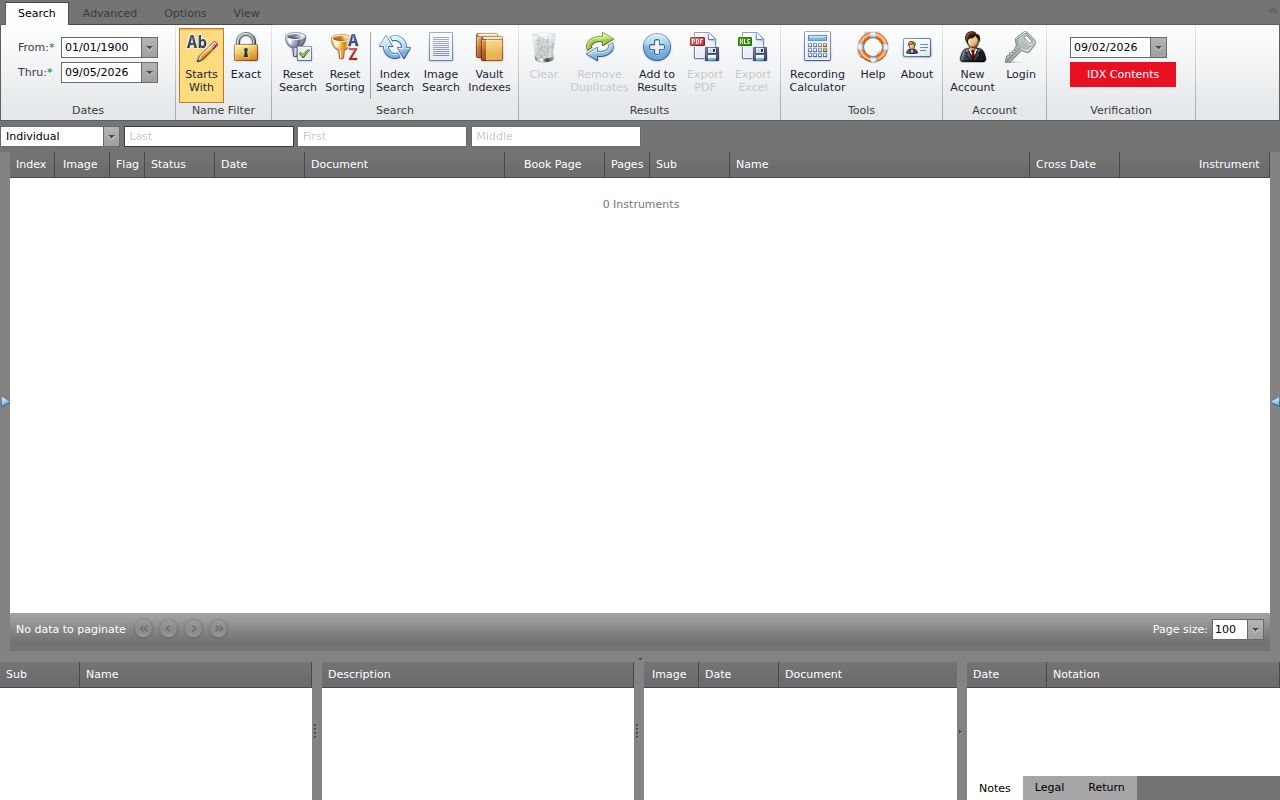
The screen is an index lead, not proof that a party lived at the Clarksburg property. Save the document type, recording date, book and page, and legal description.
| IDX field | Use in a backward search |
|---|---|
| Last/Firm and First | Tests a buyer, seller, or entity name |
| From and Thru | Limits results to a likely transfer period |
| Subindex role | Preserves grantor, grantee, will, estate, or road context |
| Document type | Separates deeds from releases, plats, liens, and other filings |
Note: An online selector does not guarantee a clear image for every page, so confirm difficult entries with the Harrison County Clerk.
Trace Harrison County Past Owners
The current owner is only a starting point. Use the Harrison County Assessor search to record parcel parts and the situs, or property-location, address. Compare them with MapWV. An owner mailing address can differ from the house. Ownership does not prove occupancy.
- Record the current owner, district, map, parcel, suffix, situs, and legal description. Keep the Root Parcel ID when MapWV supplies it.
- Find that owner’s purchase instrument in IDX. Note the grantor, recording date, book, page, and land description.
- Search the seller as a grantee in earlier years. Match the parcel through lot, block, subdivision, acreage, or adjoining-owner language.
- Repeat each transfer. Add a release, tax deed, right of way, plat, or survey only when it explains title or address continuity.
- When the online trail ends, ask the County Clerk for the specific book, page, image, or copy route.
- Grantor and grantee
- The grantor transfers an interest; the grantee receives it.
- Chain of title
- The dated sequence of instruments transferring the same land interest.
- Legal description
- Lot, block, subdivision, boundary, or other land words that identify property better than an old number.
- Root Parcel ID
- MapWV’s combined county, district, map, parcel, suffix, and special identifier.
Clarksburg Previous Residents Between Editions
The State Archives inventory lists editions for 1900-01, 1917, 1923, 1939, 1946, 1957-1959, 1964, 1966, 1971-2010, and 2012-2016. Those are snapshots. A gap does not prove that no one lived at an address.
Search the closest edition before and after a suspected move. Copy the printed name, house number, street, household mark, edition, and page. If a name vanishes, test marriage, death, a move, a number change, or spelling with a deed, census, paper, or obituary. The Clarksburg city directory page covers the collections themselves; here, each edition is one dated link in the address chain.
A reverse or criss-cross directory arranges entries by street rather than surname. Waldomore has not posted a verified title list or years for such volumes. Ask if one is cataloged as a telephone or street directory before planning a visit.
Map Old Clarksburg Address Clues
Library of Congress Sanborn maps preserve Clarksburg in four stages: one sheet in 1884, two in 1890, 37 in 1911, and 42 in 1916. They show footprints, uses, roads, schools, churches, industries, and district labels. They do not list previous residents. Their value is fixing a building within a dated setting.
Labels such as Adamston, Stealey Heights, Broad Oaks, North View, Norwood, Grasselli, Industrial, Point Comfort, Golf Plaza, and New Fair Grounds can unlock a failed search. Cite the year and sheet. Compare the footprint, street, landmark, legal description, and parcel. Clarksburg grew in stages, and official planning history notes uneven street links and a 1917 charter revision allowing annexation.
No authoritative source confirms a citywide 1912 renumbering. Do not equate house numbers by resemblance. A deed, directory sequence, plat, official address file, or mapped landmark must carry that link.
Note: A name on a Sanborn sheet may mark a district, development, industry, or landmark rather than a current neighborhood.
Clarksburg House History at Waldomore
When the web trail ends, the Waldomore research room can bridge it. North-Central West Virginia holdings include photos, diaries, letters, maps, church histories, yearbooks, cemetery lists, obituaries, posters, and artifacts. Items with WALDOMORE or ARCHIVES call numbers may need an appointment and careful handling. Ask for the collection, box or call number, reproduction rule, and any street or family index.
The library page below shows the local collection route for past residents and places.
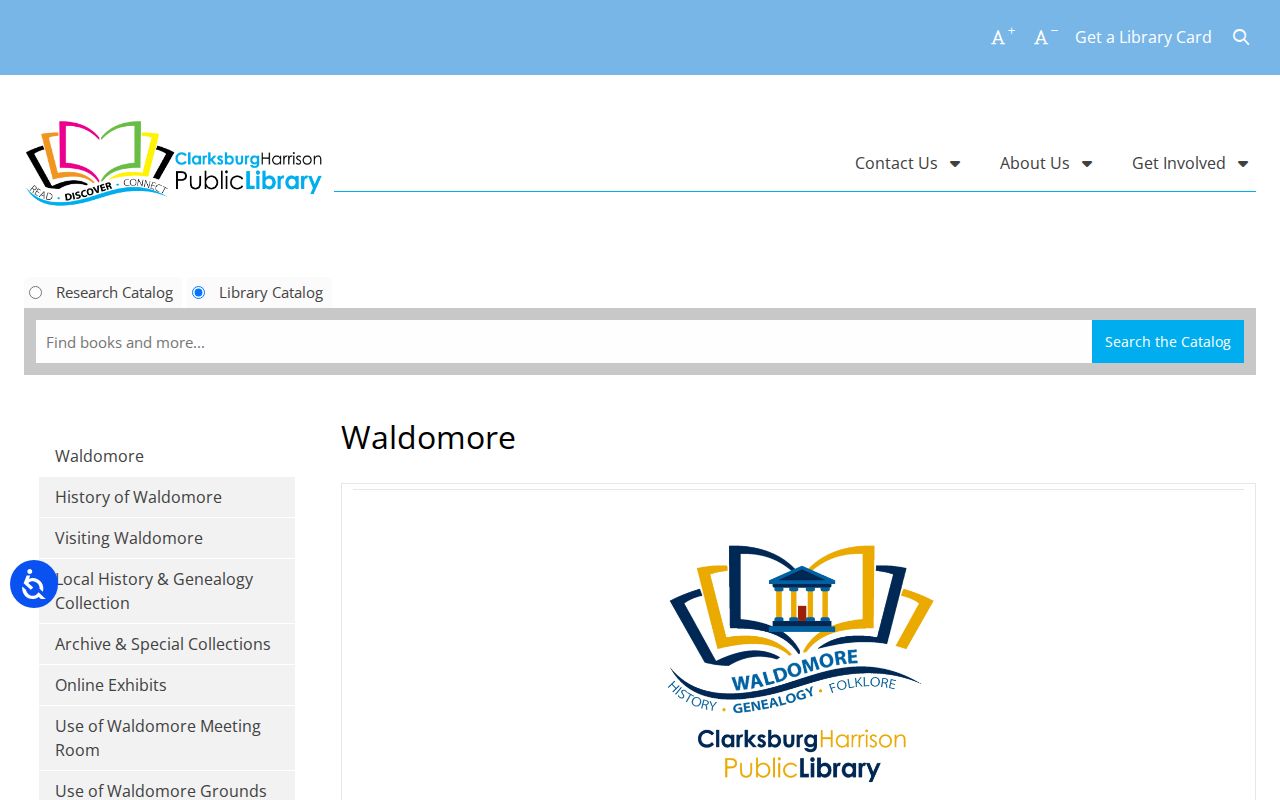
A dated image, obituary, church item, or letter can support an address trail. Private papers still need a clear citation and an official-record check.
Waldomore occupies an 1842 building and served as the library from 1931 to 1975. Its research room is listed by appointment, Monday through Friday, 10:00 a.m. to 6:00 p.m. The main library also offers newspaper and obituary requests, scanning, and genealogy help.
Clarksburg Past Households in Context
Owners are only half of house history. Directories may name a householder, spouse, widow, boarder, or public role. Census schedules through 1950 can add relationship, age, birthplace, and street data under the 72-year release rule. Pair records by date and address, not surname alone.
- Choose the directory closest to a released census year and copy the entry exactly.
- Find the census district, page or sheet, street, house number, and household. Keep the year with each fact.
- Compare names and relationships with the prior and next available directory.
- Use a deed to test ownership, then a newspaper, obituary, cemetery record, marriage bond, will, or estate book to explain change.
National Archives census guidance explains the released schedule route. Chronicling America records the Clarksburg Telegram, Daily Telegram, and Cooper’s Clarksburg Register. Search a name with a street, church, school, business, or narrow date. Verify OCR against the issue image.
Lawful use. Research previous residents for family history, an estate, or a Clarksburg home’s history. Never expose a protected address or use old and current records to watch, harass, or harm a living person.
Verify Clarksburg Previous Residents
A sound conclusion preserves what each record says. A parcel portal displays an owner. A deed index lists instrument parties. A directory prints a dated address. A census describes a household on one date. None proves current residence.
Build a citation for each step: source, record type, date, role, address or legal description, book and page or image, collection, and access date. Record conflicts. Harrison County began in 1784, and records passed through several courthouse settings, but no official source found here confirms a wholesale courthouse fire or loss. A missing image may reflect scanning, access rules, indexing, or a series gap.
Ask the custodian for a named instrument or series, not a conclusion about who lived there. That narrow request gives staff enough detail to locate a deed book, plat, probate file, map, or archive item and helps keep a previous residents search honest.